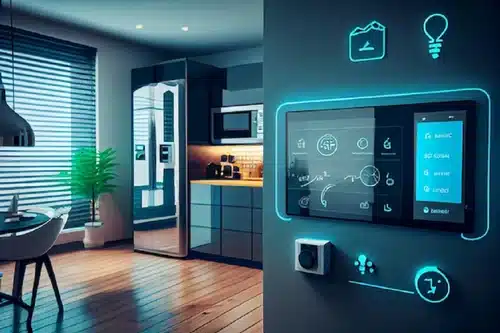
Welcome to the future, where your house doesn’t just sit there, it thinks. Imagine walking into your home and the lights adjust to your mood, your coffee starts brewing, and your favorite playlist kicks in. Sounds like a sci-fi movie? Nope, that’s what a domotic system can do for you. Let’s dive into the world of smart homes and discover how technology is turning houses into intelligent living spaces.
A domotic system, also known as a smart home system, refers to a network of devices and technologies designed to automate and control various home functions; think lighting, heating, security, and even entertainment. The word “domotic” comes from the Latin “domus” (home) and “automatic”, meaning it’s all about automating the way your home behaves.
Not too long ago, home automation meant clunky remotes and limited functionality. Fast forward to today, voice commands, smartphone apps, and AI-driven systems make it all seamless. Domotic systems have grown from being a luxury to a practical, everyday necessity in modern living.
At its core, a domotic system connects devices via a centralized control unit or app. The brain of the system communicates with various components through wireless or wired networks, making everything work together harmoniously. You send a command via your phone or voice assistant, and boom, action executed.
Now, let’s break down what makes these systems tick.
These are the eyes and ears of your home. They detect motion, temperature changes, light levels, or even water leaks. Once they pick up on something, they send data to the central hub to trigger a response.
Think of this as the command center. It processes information from the sensors and sends commands to the actuators. Some hubs come with AI capabilities to learn your routines and optimize accordingly.
These are your smart bulbs, thermostats, locks, and other gadgets. They’re the muscles, doing the physical work based on what the hub tells them.
So, what exactly can you control with a domotic system? More than you probably think!
Forget about flipping switches. Control lighting levels with your phone, or have lights adjust automatically based on time or room occupancy.
Smart cameras, door sensors, alarms, and video doorbells help keep your home safe. You can monitor everything remotely and get alerts if anything seems fishy.
Domotic systems allow you to fine-tune your HVAC for maximum comfort and minimal energy waste. Smart thermostats learn your habits and adjust settings accordingly.
Set the mood with a single command: turn on your TV, dim the lights, close the blinds, and queue up Netflix. It’s like having a personal movie butler.
Ready to fall in love with your home? Here’s why domotics is winning hearts everywhere.
Control everything from your couch, bed, or halfway across the globe. Whether it’s dimming lights or checking if you left the stove on, you’re always in control.
Smart systems help reduce your carbon footprint by optimizing power usage, lights turn off when not needed, heating adjusts based on presence, and appliances can be scheduled for off-peak hours.
Real-time alerts, remote surveillance, and automated locks make your home safer and give you peace of mind, even while you’re on vacation.
Domotic systems can dramatically improve the quality of life for the elderly or individuals with physical limitations. Voice commands and automation reduce the need for manual actions.
Of course, it’s not all rainbows and unicorns. There are a few bumps on the road to a smarter home.
Let’s be real, setting up a full domotic system isn’t cheap. High-quality equipment and professional installation can add up quickly.
With great data comes great responsibility. Your smart home collects a lot of information, and if not properly secured, that could be a hacker’s dream.
Not all devices play nicely together. Some brands work best within their ecosystem, which can limit your options if you’re trying to mix and match.
Wireless systems are easy to install and scale, but they may suffer from connectivity issues. Wired systems offer stability and speed but are more complex and expensive to set up. Your choice depends on your home layout and budget.
Think your home is smart now? The future holds even more exciting possibilities, like predictive AI that adjusts everything based on your mood, voice biometrics for authentication, and complete energy autonomy with smart grids and solar integration.
Here’s where it gets personal. Consider your lifestyle, budget, home size, and which features matter most. Are you big on security? Energy savings? Entertainment? Choose a system that aligns with your goals.
If you’re tech-savvy and enjoy tinkering, a DIY kit might be right up your alley. But for large-scale setups or more advanced integrations, hiring a pro ensures a smooth experience and proper configuration.
Some top players in the game include:
Google Nest – Great for climate and security
Amazon Alexa – Excellent voice integration and wide compatibility
Apple HomeKit – Ideal for Apple ecosystem users
Samsung SmartThings – Very flexible and feature-rich
Control4 – High-end and powerful for luxury homes
Domotic systems are not just futuristic dreams anymore; they’re here, real, and incredibly functional. From making life easier to securing your home and reducing your energy bills, the benefits are too big to ignore. Yes, there are challenges, but with the right setup and awareness, you can transform your house into a tech-savvy paradise. So, are you ready to give your home a brain?
1. What is the difference between a domotic system and home automation?
They’re essentially the same. “Domotic system” is a broader term encompassing all home automation technologies under one umbrella.
2. Are domotic systems secure from hackers?
They can be, but it depends on how well you protect your network. Use strong passwords, secure Wi-Fi, and keep devices updated.
3. Do I need a big budget to start with domotics?
Not necessarily. You can start small with a few smart bulbs or plugs and scale up as needed.
4. Can I install a domotic system in a rented apartment?
Yes! Wireless domotic devices are perfect for renters, they’re easy to install and move.
5. What if the internet goes down?
Many systems have offline functionalities or local control options, so you won’t be left in the dark literally.
In today’s competitive digital economy, businesses must embrace technology to stay relevant, efficient, and profitable.…
In today’s fast-paced digital landscape, businesses are no longer competing based solely on products or…
Reports and industry speculation suggest that WhatsApp may introduce a Premium “Plus” subscription tier, potentially…
Artificial intelligence is no longer a niche technology reserved for experts. In 2026, AI tools…
The pace of technological advancement is accelerating, and 2026 is set to be a landmark…
Ever wondered if there's a second Earth out there? One that looks like our own…
This website uses cookies.